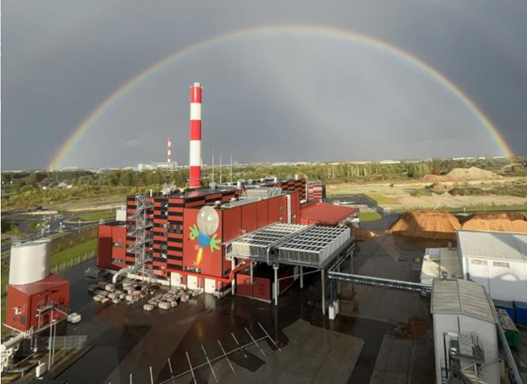
24 MW Heat pump for district heating | Tallinn, Estonia
District heating is well established in Tallinn, Estonia, with approximately 60% of the city supplied by the district heating network. The primary heat source is a biomass combined heat and power (CHP) plant that uses waste wood from local forestry operations. The woodchips have a moisture content of around 50%. During peak demand periods, gas-fired boilers have traditionally been used to supplement heating capacity.To reduce dependence on natural gas, lower the carbon footprint, and decrease heat production costs, a 24 MW heat pump was commissioned in 2024. The heat pump recovers waste heat from the CHP plant’s flue gas, which was previously discharged through the chimney. By capturing this energy and upgrading it to 80 °C, the recovered heat can be fed directly into the district heating network. This solution reduces annual gas consumption by 13.5 million m³, cuts CO₂ emissions by approximately 20,000 tonnes per year, and lowers the overall cost of heat production.The system recovers 18 MW of heat from the flue gas while simultaneously condensing the moisture it contains. The high moisture content of the woodchips results in flue gas with significant latent heat potential. Four heat pumps are installed, each operating with a coefficient of performance above 4, meaning that every 1 kW of electrical input produces more than 4 kW of thermal output. In total, 6 MW of electrical power is used to generate 24 MW of renewable heat.The heat pump is powered by electricity from renewable sources, resulting in zero CO₂ emissions associated with its operation.